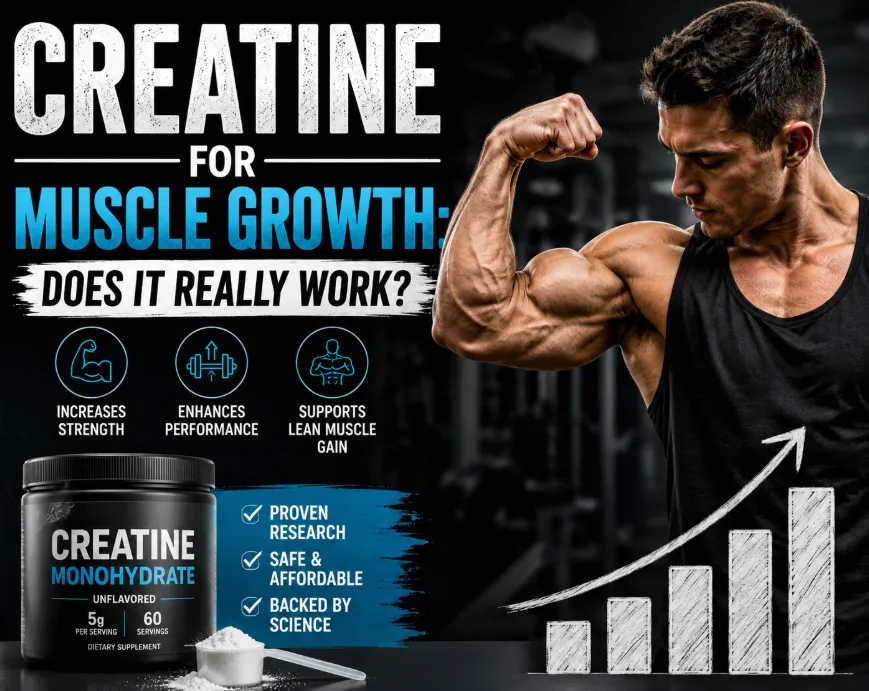
Creatine is one of the most popular and scientifically researched supplements in the fitness industry. From professional athletes and bodybuilders to everyday gym-goers, millions of people use creatine to support strength, performance, and muscle-building goals.
But despite its widespread popularity, many people still ask:
Does creatine really help build muscle?
The short answer is yes. Numerous scientific studies have shown that creatine can support muscle growth when combined with proper resistance training and nutrition.QUOR However, understanding how creatine works and what results you can realistically expect is important.
In this guide, we’ll explore the science behind creatine for muscle growth, examine research findings, discuss benefits, and explain how to use creatine effectively to maximize your muscle-building potential.
What Is Creatine?
Creatine is a naturally occurring compound produced by the body from three amino acids:
-
Arginine
-
Glycine
-
Methionine
It is synthesized primarily in the:
-
Liver
-
Kidneys
-
Pancreas
After production, creatine is transported to muscles, where approximately 95% of the body’s creatine is stored.
Creatine is also naturally found in foods such as:
-
Beef
-
Pork
-
Salmon
-
Tuna
-
Herring
Because dietary intake alone may not fully maximize muscle creatine stores, many athletes choose creatine supplementation.
How Creatine Works in the Body
To understand how creatine supports muscle growth, it’s important to understand its role in energy production.
ATP Production
Muscles rely on adenosine triphosphate (ATP) as their primary energy source.
During high-intensity activities such as:
-
Weightlifting
-
Sprinting
-
Jumping
-
Resistance training
ATP is rapidly depleted.
Creatine helps regenerate ATP more efficiently, allowing muscles to continue producing force during intense exercise.
This enhanced energy availability is one of the primary reasons creatine can support muscle-building efforts.
Does Creatine Build Muscle Directly?
Creatine does not directly build muscle in the same way that protein provides amino acids for muscle repair.
Instead, creatine helps create an environment that supports muscle growth.
How Creatine Supports Muscle Growth
Creatine may help by:
-
Increasing training volume
-
Supporting workout intensity
-
Improving strength output
-
Enhancing recovery between sets
-
Promoting greater overall performance
Over time, these factors can contribute to increased muscle mass when combined with consistent resistance training.
What Research Says About Creatine and Muscle Growth
Creatine is one of the most studied sports nutrition ingredients in existence.
Researchers have examined its effects across:
-
Men and women
-
Beginners
-
Experienced athletes
-
Older adults
-
Various training programs
The overwhelming body of evidence suggests that creatine supplementation can support greater gains in muscle mass and strength compared to training alone.
Because of this extensive research support, creatine is often considered the gold standard of performance supplements.
Benefits of Creatine for Muscle Growth
1. Increased Training Capacity
One of the biggest factors influencing muscle growth is training volume.
Training volume refers to:
-
Sets
-
Repetitions
-
Total workload
Creatine helps support energy production, allowing many athletes to perform more work during workouts.
Greater training volume can contribute to improved muscle-building outcomes over time.
2. Improved Strength
Strength gains often lead to progressive overload, a key principle of muscle growth.
By supporting strength development, creatine may help individuals:
-
Lift heavier weights
-
Perform additional repetitions
-
Increase workout intensity
These improvements create opportunities for greater muscular development.
3. Enhanced Power Output
Creatine is particularly beneficial for explosive movements.
Examples include:
-
Squats
-
Deadlifts
-
Bench presses
-
Sprinting
-
Olympic lifting
Supporting power production can improve training effectiveness and overall performance.
4. Increased Muscle Hydration
Creatine draws water into muscle cells.
This effect can contribute to:
-
Fuller-looking muscles
-
Increased cell hydration
-
Temporary increases in muscle size
Although some of this initial growth is related to water retention, it can still contribute to a more favorable environment for training and recovery.
5. Long-Term Muscle Development
The combination of improved strength, training volume, and workout performance can support long-term muscle-building goals.
Many athletes use creatine year-round because of these cumulative benefits.
How Much Muscle Can Creatine Help You Gain?
Results vary depending on several factors, including:
-
Training experience
-
Nutrition
-
Genetics
-
Consistency
-
Overall program design
Creatine is not a magic solution that produces muscle growth without effort.
However, when combined with:
-
Resistance training
-
Adequate protein intake
-
Proper recovery
it may help individuals achieve greater progress compared to training alone.
Creatine for Beginners
Beginners often experience some of the most noticeable benefits from creatine supplementation.
Why?
Because beginners typically have more room for improvement in:
-
Strength
-
Training capacity
-
Muscle development
Creatine can complement a well-structured training program and help support consistent progress.
Creatine for Experienced Lifters
Even advanced athletes continue using creatine because:
-
Strength gains remain valuable
-
Workout performance matters
-
Training quality can influence long-term results
Creatine remains one of the few supplements consistently recommended across all experience levels.
Best Type of Creatine for Muscle Growth
Creatine Monohydrate
Creatine monohydrate remains the most researched and widely recommended form.
Benefits include:
-
Extensive scientific support
-
Proven effectiveness
-
Affordability
-
Broad availability
Most research supporting creatine’s role in muscle growth has focused specifically on creatine monohydrate.
For this reason, it remains the preferred choice for most consumers.
How Much Creatine Should You Take?
For most healthy adults:
Maintenance Dose
3–5 grams per day
This dosage is sufficient to maintain elevated muscle creatine stores.
Loading Phase (Optional)
Some users choose:
20 grams daily
Divided into four servings for approximately 5–7 days before transitioning to maintenance intake.
Loading can accelerate muscle saturation but is not required.
When Should You Take Creatine?
Research suggests that consistency matters more than precise timing.
Many individuals take creatine:
-
Before workouts
-
After workouts
-
With meals
-
At any convenient time
The goal is maintaining daily supplementation.
Common Myths About Creatine and Muscle Growth
Myth #1: Creatine Is a Steroid
False.
Creatine is not a steroid and works through an entirely different mechanism.
Myth #2: Creatine Builds Muscle Without Exercise
False.
Creatine supports training performance but does not replace resistance training.
Myth #3: More Creatine Means More Muscle
False.
Once muscle creatine stores are saturated, consuming significantly larger amounts generally provides little additional benefit.
Frequently Asked Questions
Does Creatine Really Help Build Muscle?
Yes. Research consistently shows that creatine can support muscle growth when combined with proper training and nutrition.
How Long Does Creatine Take to Work?
Many users begin noticing performance-related benefits within a few weeks of consistent supplementation.
Is Creatine Good for Muscle Growth?
Creatine is one of the most effective and well-researched supplements available for supporting muscle-building efforts.
What Is the Best Creatine for Muscle Growth?
Creatine monohydrate remains the most recommended form due to its extensive scientific support.
Can Beginners Use Creatine?
Absolutely. Creatine is commonly used by both beginners and experienced athletes.
Final Thoughts
So, does creatine really work for muscle growth?
The scientific evidence overwhelmingly suggests that it does. While creatine does not directly build muscle like dietary protein supports muscle repair, it helps create the conditions that allow for better training performance, increased strength, greater workout volume, and improved long-term progress.
By supporting ATP production and helping muscles perform more work during resistance training, creatine can play a valuable role in a muscle-building program. Combined with proper nutrition, adequate protein intake, progressive resistance training, and recovery, creatine remains one of the most effective and trusted supplements available for individuals looking to maximize their muscle growth potential.
For beginners and experienced lifters alike, creatine monohydrate continues to stand out as a simple, affordable, and science-backed tool for supporting strength and muscle development.